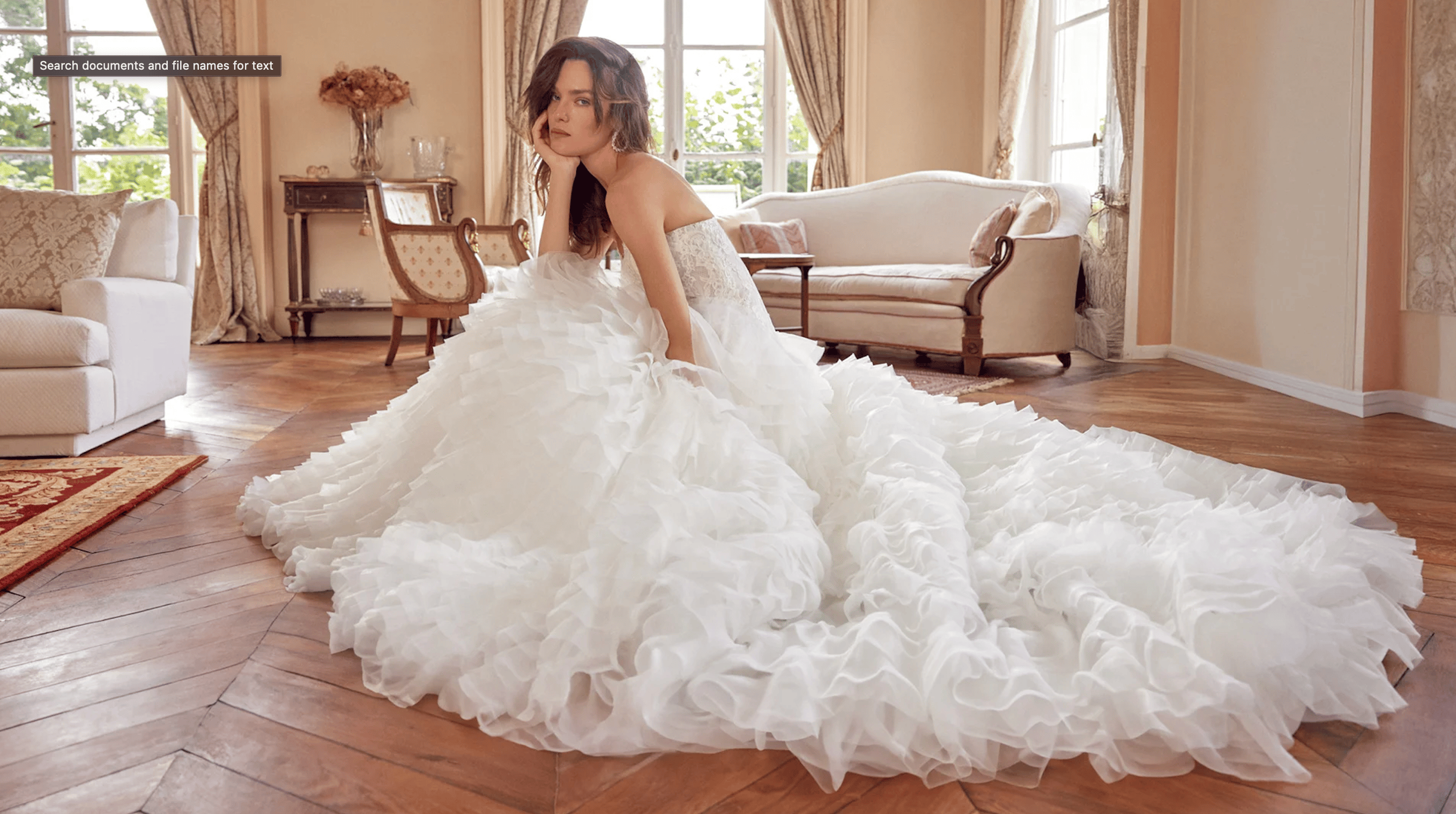
Have you ever looked at an old wedding photo and immediately thought, that has to be from the '80s? Or spotted a bias-cut gown dripping in Art Deco beading and known, without a doubt, it belonged to another time entirely? Wedding dresses are more than just beautiful garments, they're time capsules. Every silhouette, neckline, and fabric choice is a reflection of the world the bride was living in: its pop culture, its politics, its idea of what femininity should look like.
Whether you're shopping vintage, flipping through a grandmother's photo album, or just fascinated by fashion history, here's your decade-by-decade guide to understanding the bridal looks that defined each era, and why so many of them keep coming back around.
The 1920s: the original slip dress
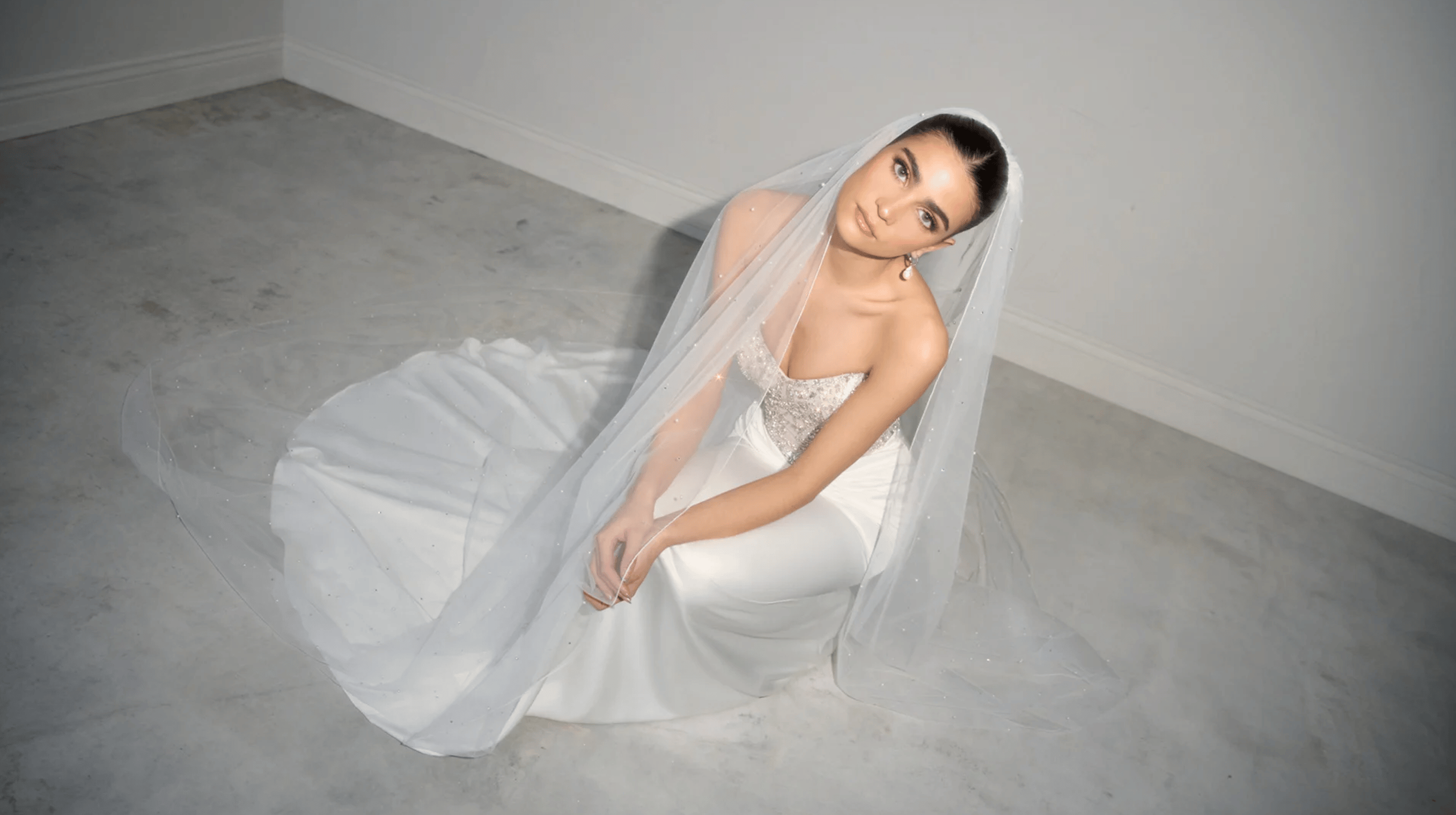
Long before the minimalist wedding dress had a moment on Instagram, the 1920s bride was already there. The silhouette of this era was revolutionary for its time: a dropped waist, a loose column-like shape that skimmed rather than cinched, and hemlines that dared to show an ankle, or sometimes a knee. These weren't the poufy, structured gowns we'd see decades later. They were fluid, almost architectural in their simplicity, and almost always adorned with the most extraordinary detail work: intricate Art Deco beading, delicate fringe, embroidered florals, and graceful low open backs, a hallmark of late-1920s bridal and evening fashion.
The fabrics were sumptuous, silk charmeuse, chiffon, and crepe, and the overall effect was one of effortless glamour rather than theatrical grandeur. There was a lightness to these gowns, a sense that the woman wearing one was stepping into a new, more liberated era. She was.
What's striking is how modern this silhouette still feels. The bias-cut, the minimalism, the emphasis on beautiful fabric over heavy structure. It's no surprise that the 1920s aesthetic has had a full revival in contemporary bridal fashion. Today's designers continue to revisit this era, drawn to its understated elegance and the way it lets the bride, not the dress, be the focal point.
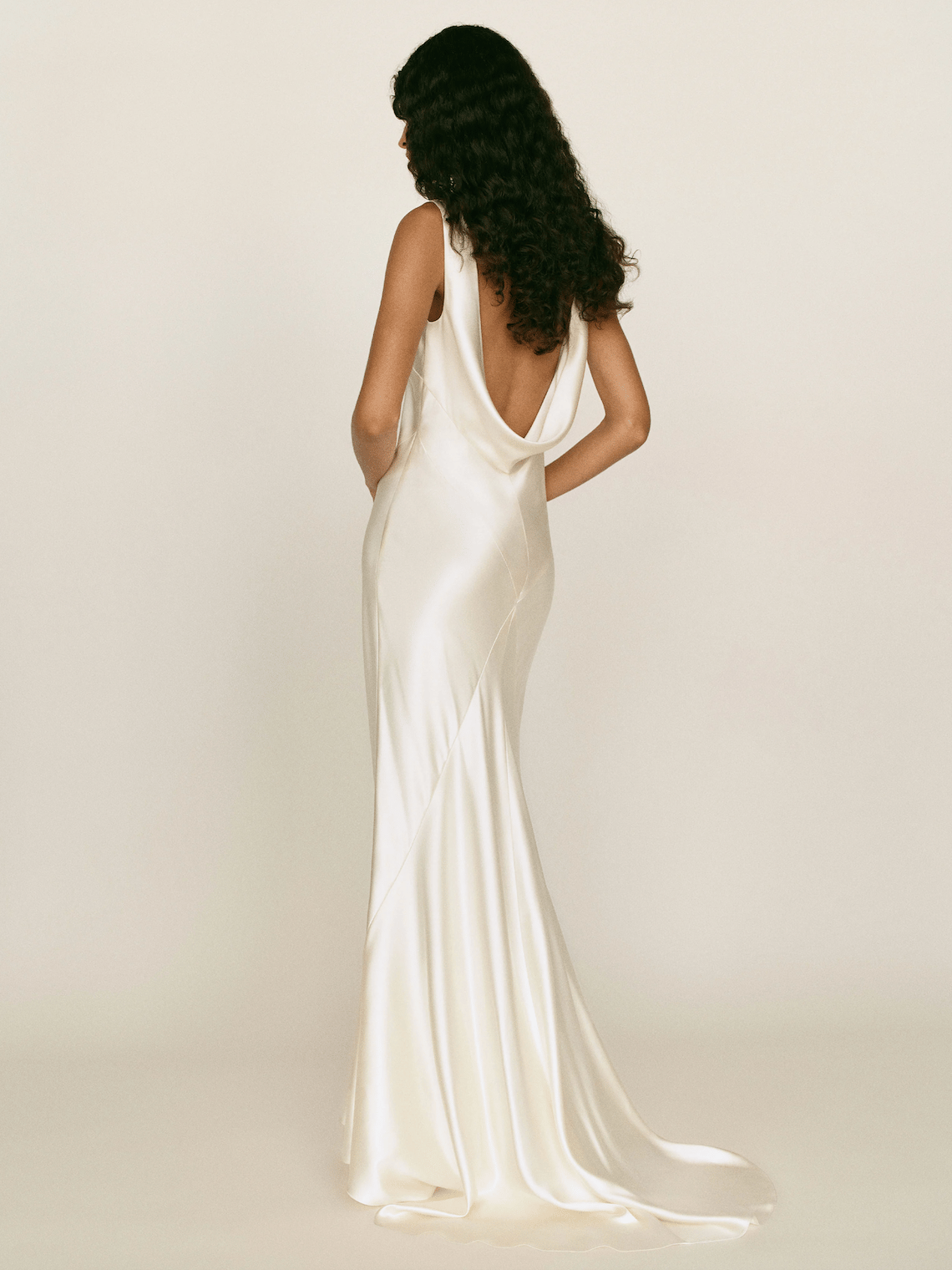
Reformation · $998
Isabelle Silk Dress
And the bride wore this. The Isabelle Silk Dress is a maxi dress with a high neckline and a low scoop back. In case of keeping up appearances.
Find StoreThe 1950s: audrey hepburn and the art of understated elegance
If the 1920s gave us freedom, the 1950s gave us polish. Post-war optimism translated into a very specific bridal ideal: nipped waists, full skirts or clean sheaths, and a ladylike refinement that stopped just short of being fussy. This was the decade of the picture-perfect bride, and no one embodied that aesthetic more than Audrey Hepburn.
Hepburn's influence on bridal fashion cannot be overstated. Her love of clean lines, sculptural necklines, particularly the boat neck, and unfussy silhouettes quietly rewrote what it meant to look elegant on your wedding day. The boat neckline in particular became iconic: horizontally wide, skimming the collarbone, exuding a kind of cool grace that felt effortless rather than overdressed. It gave brides a way to look undeniably chic without a single ruffle in sight.
Three-quarter-length sleeves, tea-length hems, and an overall sense of refined restraint defined this era. The beauty was in the precision: a perfectly placed seam, a beautifully cut neckline, and impeccable tailoring. More than seventy years later, those same principles still define timeless bridal style, which is why the Audrey-inspired boat neck remains one of the most enduring silhouettes in modern wedding fashion.
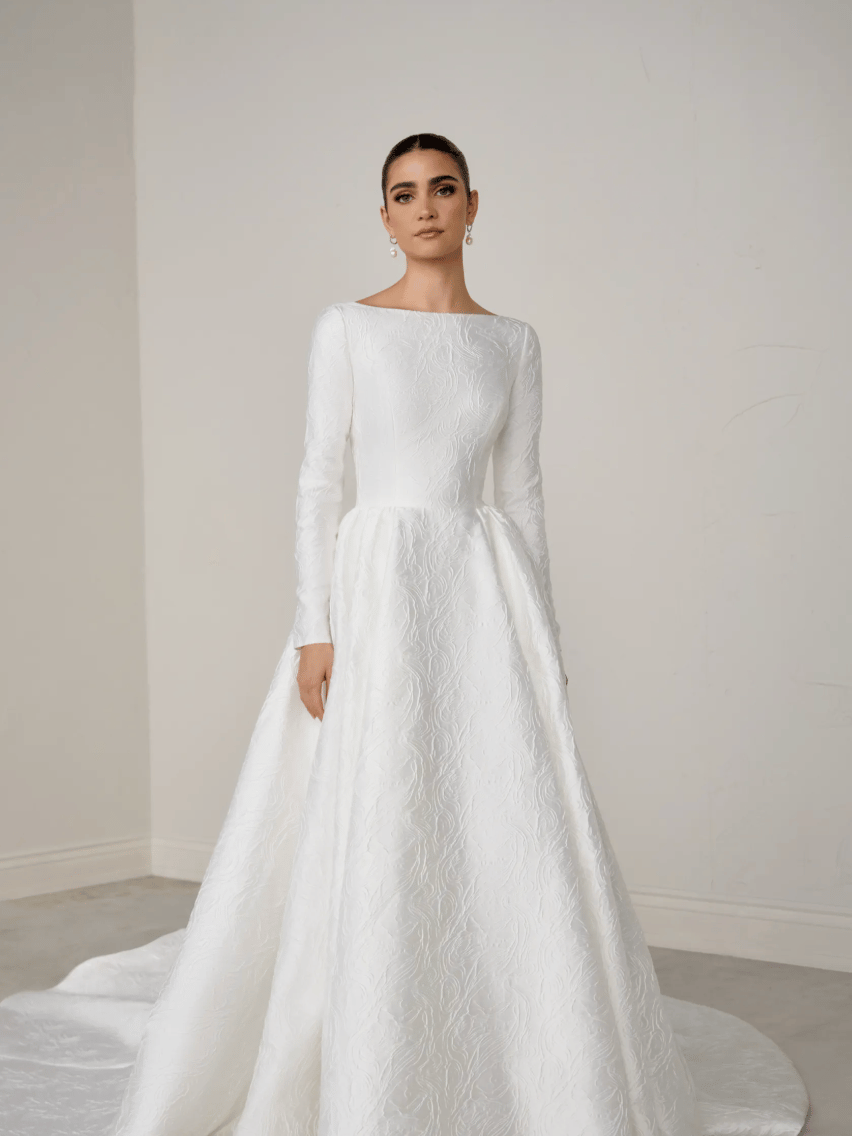
Justin Alexander Signature
Calista
Brocade A-Line Gown with Sabrina Neckline, Long Sleeves and Open Back
Find StoreThe 1960s: mod minimalism takes the aisle
By the time the '60s arrived, the ladylike ideals of the previous decade were beginning to crack. Hemlines crept upward. Silhouettes became sharper and cleaner. The voluminous skirts and corsetry of earlier decades gave way to something sleeker, more geometric: the A‑line.
The A-line wedding dress, gently flared from shoulder to floor, with no dramatic cinching or structure, became one of the most enduring bridal silhouettes of all time, and its roots are firmly planted in '60s modernism. Brides of this era were also drawn to shorter, above-the-knee styles, shift dress cuts, and minimal embellishment. Space-age fashion was having its cultural moment, and it showed: clean edges, simple shapes, and an almost futuristic lack of fuss.
Fabrics were crisp, structured crepes, lace with clean borders, and simple satins. Oversized bows also emerged as a signature detail, often placed at the back of the waist or neckline to add a playful, feminine touch without compromising the clean lines of the dress. The overall look was youthful and bright. This was the decade when brides started to look like they were dressing for themselves, not just for tradition. The A-line silhouette born in this era remains one of the most universally flattering and beloved bridal shapes to this day, and for good reason.
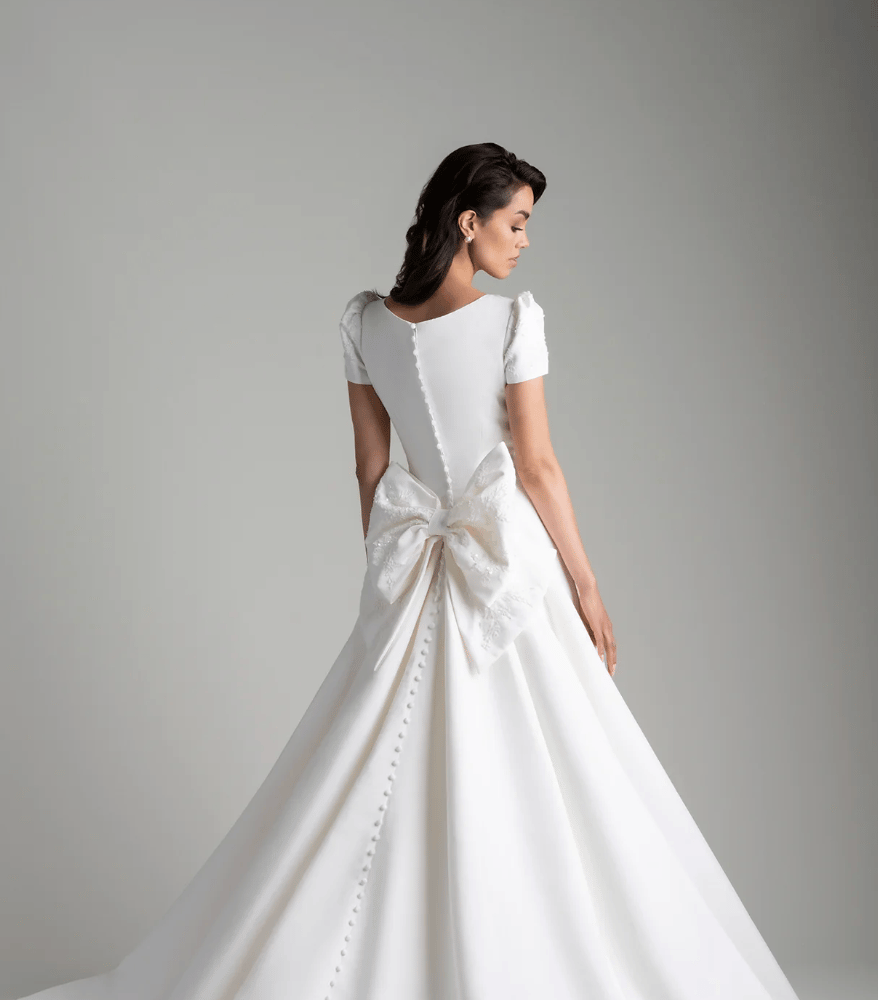
Allure Bridals
M761
This vintage-inspired ballgown features a Basque waist, cap sleeves and a statement bow at the back.
Find StoreThe 1980s: go big or go home
And then came the '80s, and subtlety left the building entirely.
There is perhaps no single moment in modern bridal history more influential than Princess Diana's wedding dress, which she wore on July 29, 1981, in front of 750 million television viewers worldwide. Designed by David and Elizabeth Emanuel, the gown was everything the decade would come to stand for: a 25-foot silk taffeta train, enormous puffed sleeves layered with lace and embroidery, a voluminous skirt, and enough drama to fill a cathedral twice over. It was theatrical, romantic, and completely, unapologetically maximalist.
Diana's dress didn't just capture a moment, it set the template for an entire decade of bridal fashion. Throughout the '80s, the formula was consistent: sleeves as large as possible (the more structure the better), heavily embellished bodices dripping in lace and beading, long sweeping trains, and a silhouette that was built around spectacle. The message was clear: your wedding dress should be the most dramatic thing you ever wear, and you should never let anyone forget it.
There's a reason '80s bridal photos are instantly recognizable. The aesthetic was so singular, so committed to excess, that it left an unmistakable stamp on every image from that era. Even today, elements of this maximalist spirit find their way back into bridal fashion; the statement sleeve has returned multiple times in recent years, always winking back at this era.
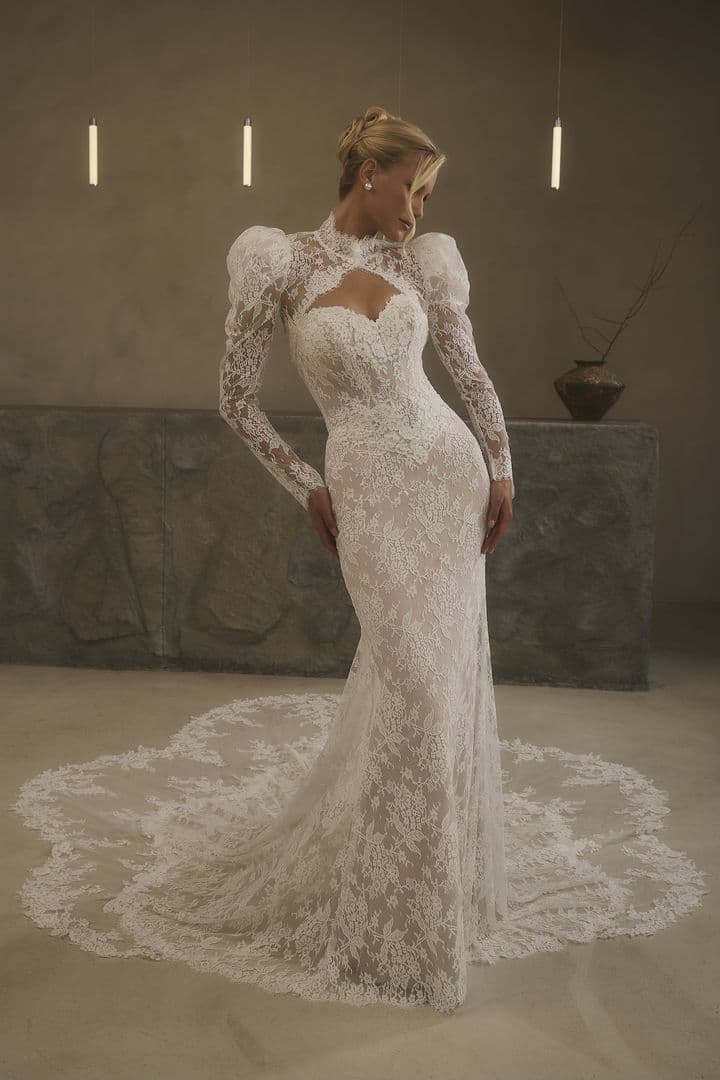
Casablanca Bridal
Darcy Jacket
The 2634JKT Darcy Jacket is a couture-inspired cropped design featuring a refined Mandarin collar and statement gigot sleeves. Sheer Chantilly lace over tulle creates an ethereal layer of texture, adding high-fashion drama to the gown while allowing the strapless bodice beneath to subtly shine.
Find StoreThe 1990s: the great minimalist reset
After a decade of puffed sleeves and dramatic trains, brides of the 1990s collectively exhaled.
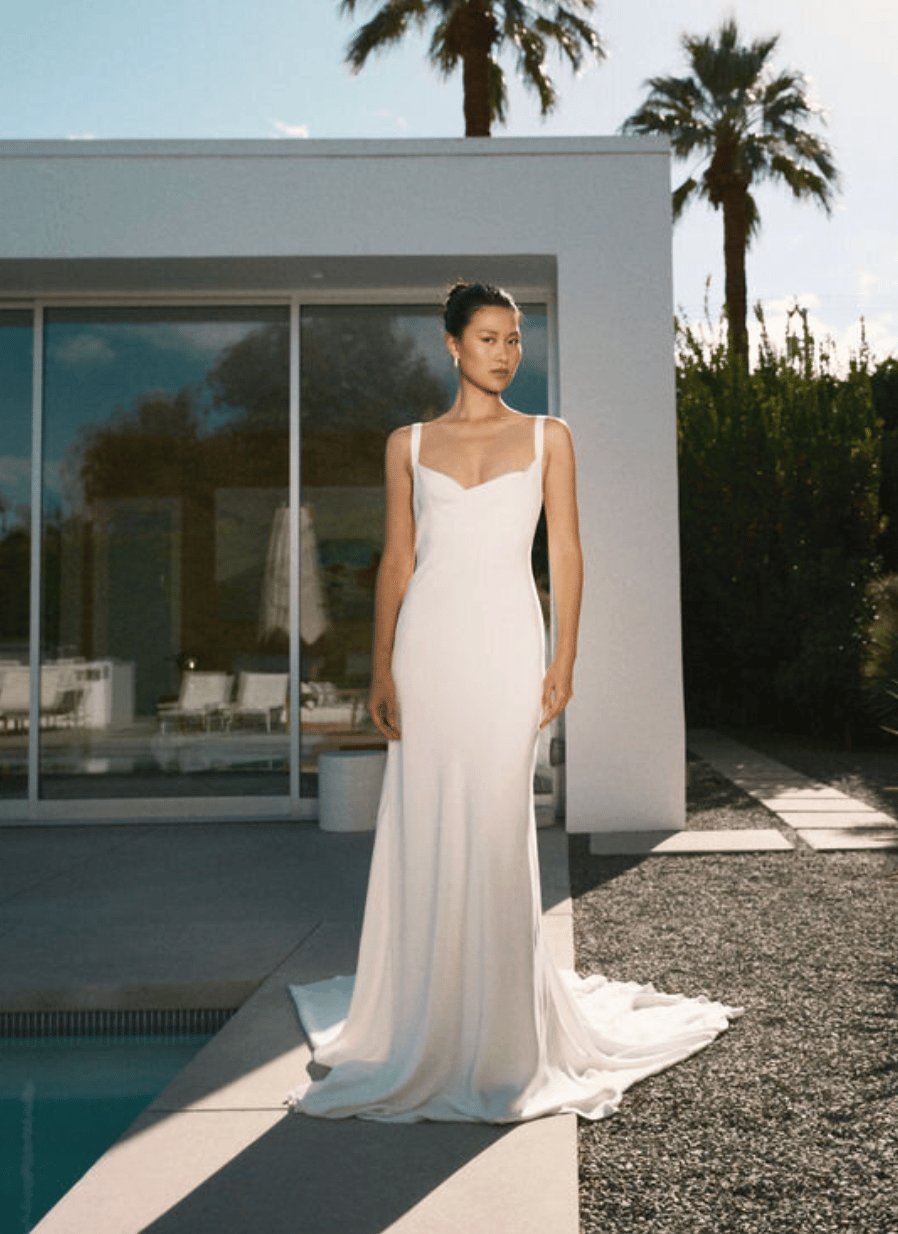
The '90s wedding dress was, in many ways, the anti-'80s: streamlined, stripped-back, and quietly sensual. Slip dresses made a triumphant return — satin, bias-cut, with spaghetti straps and a fluid drape that owed a clear debt to the 1920s. Strapless silhouettes became ubiquitous. Clean, unembellished columns replaced the heavily structured gowns of the previous decade. The look was cool, understated, and completely intentional in its simplicity.
Celebrity weddings of this era reinforced the shift: stars like Carolyn Bessette-Kennedy, who married John F. Kennedy Jr. in 1996 in a minimalist silk column gown by Narciso Rodriguez, became immediate icons of the stripped-back aesthetic. The message was the opposite of Diana's spectacle: the most powerful statement you could make was to wear almost nothing at all.
It's worth noting how closely the '90s minimalist bride echoes the 1920s bride: the same bias cut, the same emphasis on fabric and drape over structure, the same preference for subtle over showy. Fashion truly does move in cycles, and bridal fashion is no exception.
The early 2000s: the era of princess glamour
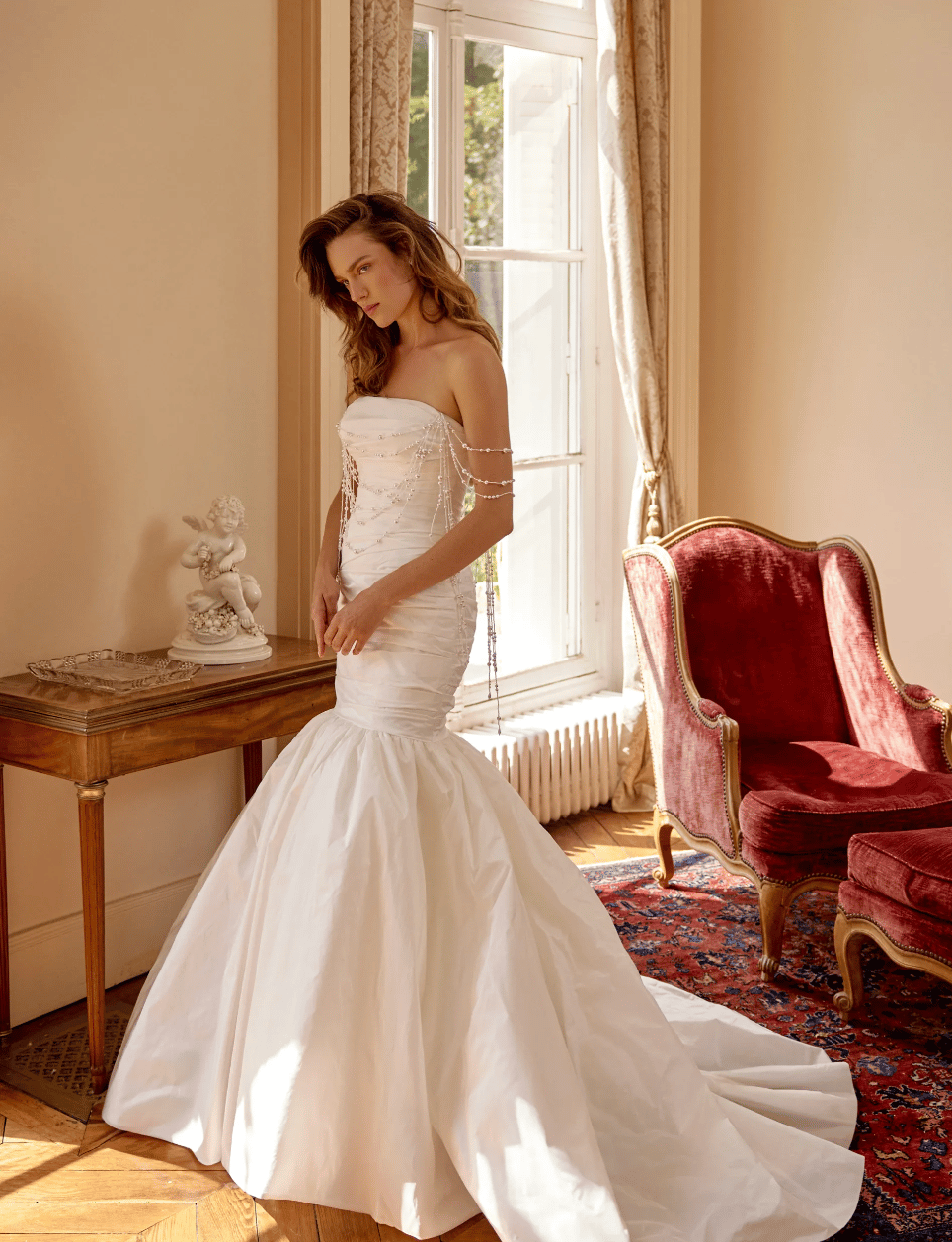
If the minimalist 1990s celebrated simplicity, the early 2000s embraced extravagance. Bridal fashion became bigger, bolder, and unapologetically glamorous. Strapless necklines dominated alongside dramatic dropped waists, figure-hugging mermaid silhouettes, voluminous ballgowns, and cathedral-length trains. Crystal embellishments, ruching, intricate embroidery, and corset-style bodices created gowns designed to make a statement.
This was the era of the fairytale bride. Influenced by celebrity weddings and Hollywood glamour, brides gravitated toward dramatic silhouettes that felt luxurious and unforgettable. Whether it was a princess ballgown or a sculpted mermaid dress, the focus was on creating a memorable entrance and a red-carpet-worthy bridal moment.
The 2020s: corsets, romance, and the return of the snatched waist
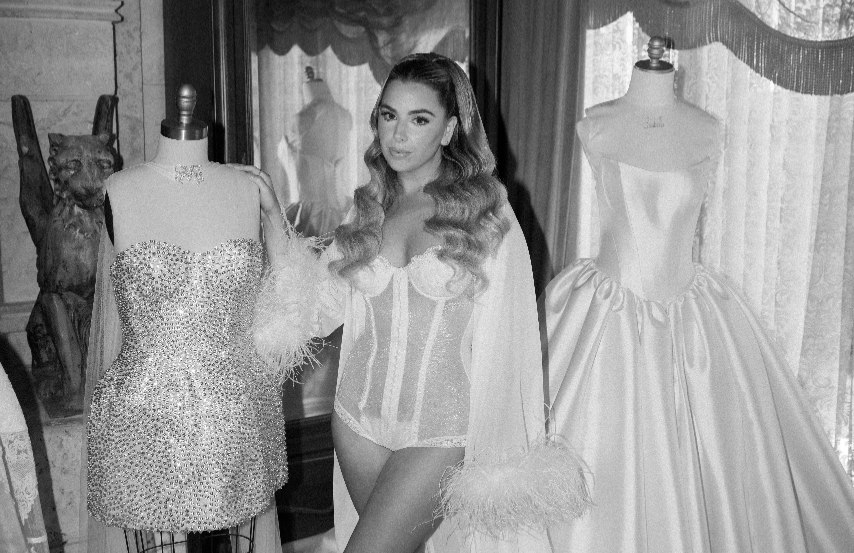
Just when bridal fashion seemed to be moving toward sleek minimalism, history made an unexpected comeback. Inspired by the global success of Bridgerton and a renewed appreciation for vintage fashion, designers began revisiting the romance of centuries past. Corseted bodices, basque waistlines, statement sleeves, high necklines, delicate lace, and regal silhouettes all returned to the spotlight, reimagined through a modern lens.
Unlike historical gowns, today's interpretations prioritize comfort as much as beauty. Modern corsetry is lighter and more flexible, creating a sculpted silhouette without the restrictive structure of the past. The result is bridal fashion that feels timeless rather than theatrical—borrowing the elegance of history while remaining unmistakably contemporary.
Perhaps the most exciting part of today's bridal fashion is that there are no rules. A bride can choose the effortless glamour of the 1920s, the polished elegance of the 1950s, the clean lines of the 1960s, the princess silhouettes of the 2000s, or the romantic drama of the Regency era. Modern bridal design celebrates every decade, proving that the most enduring trends are the ones that continue to evolve.
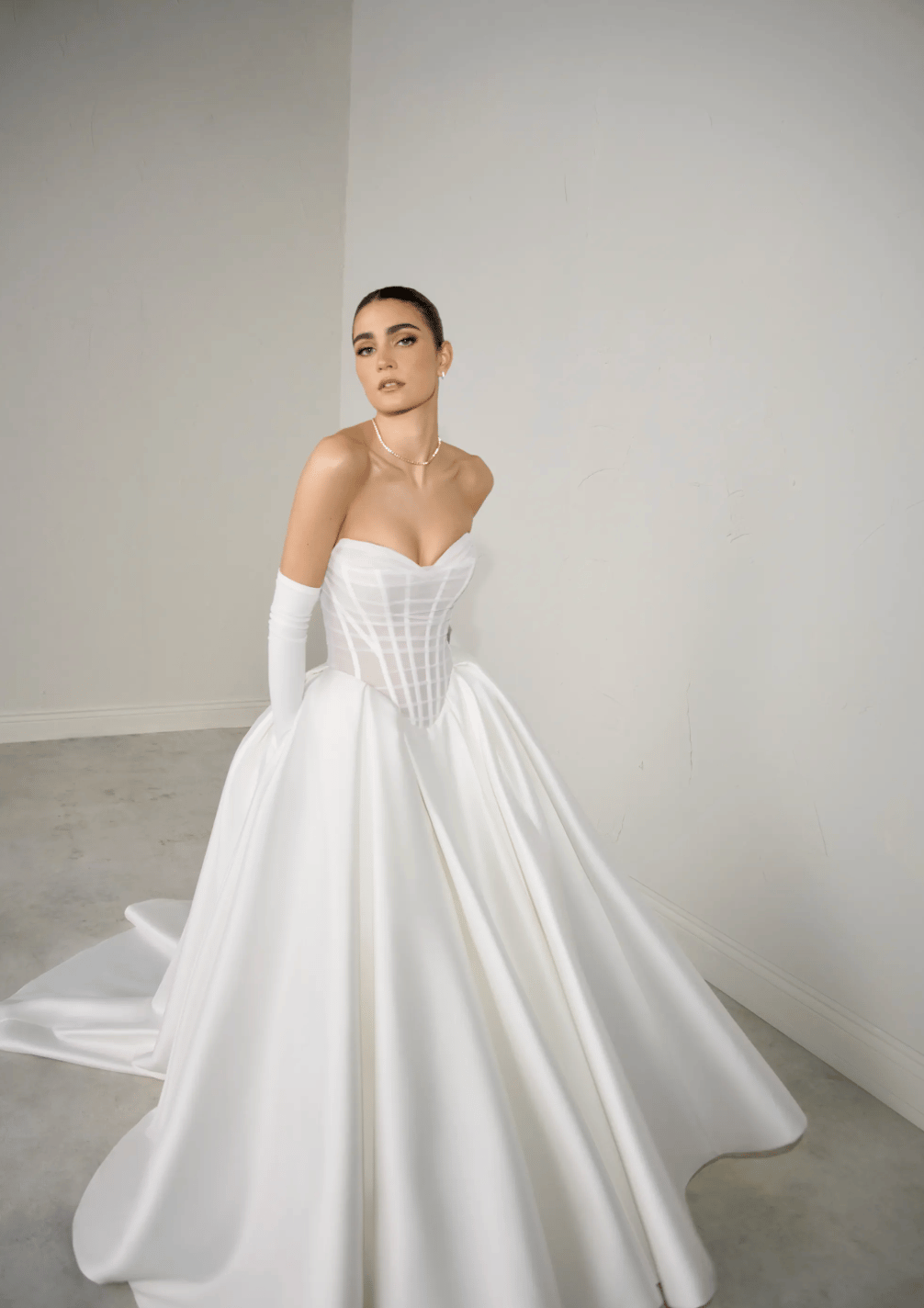
Justin Alexander Signature
MONARCH
Mikado Ball Gown with Sheer Tulle Bodice with Exposed Boning
Find StoreWhy these eras still matter today
Bridal fashion is constantly evolving, but the most iconic styles never truly disappear. The best designers understand that timeless style isn't about reinventing the wheel, it's about reinterpreting it. By blending classic silhouettes with modern craftsmanship, today's bridal gowns prove that while trends come and go, beautiful design never goes out of fashion.
After all, fashions change. The desire to feel like the most beautiful version of yourself on your wedding day never does.

Related Articles