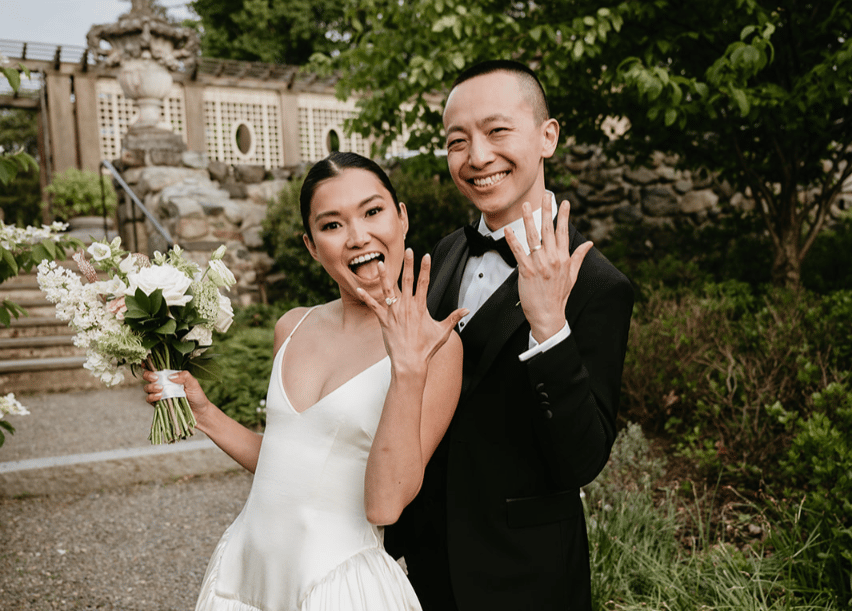
Looking at the different types of wedding rings for women can get overwhelming fast, especially once you start comparing styles of wedding bands across shape, metal, detail, and overall aesthetic. The good news is that wedding rings become much easier to understand once you break them into a few simple categories that you can mix and match.
If you want to see many of these looks in one place, you can buy wedding rings via Loverly and compare different designs side by side.
Types of wedding ring styles guide
This guide walks through four practical ways to compare wedding ring options: band shape, metal, stone/detail treatment, and design era or aesthetic. Later in the article, you’ll also find a scannable decision framework that helps narrow your choices based on lifestyle, pairing, maintenance, and taste.
How many combinations are possible? If you mix and match the four buckets below, there are exactly 64,480 possible combinations. That fun number is not meant to send you into a jewelry-induced existential crisis; it simply shows why different kinds of wedding rings can feel endless at first. Once you understand each wedding rings style bucket, the options start to make a lot more sense.
64,480 Different types of wedding rings for women
Instead of trying to memorize every name at once, start with the four lists below. Together, they cover many of the popular wedding band styles women can choose from and show how small changes in shape, material, details, or overall look can create a very different ring.
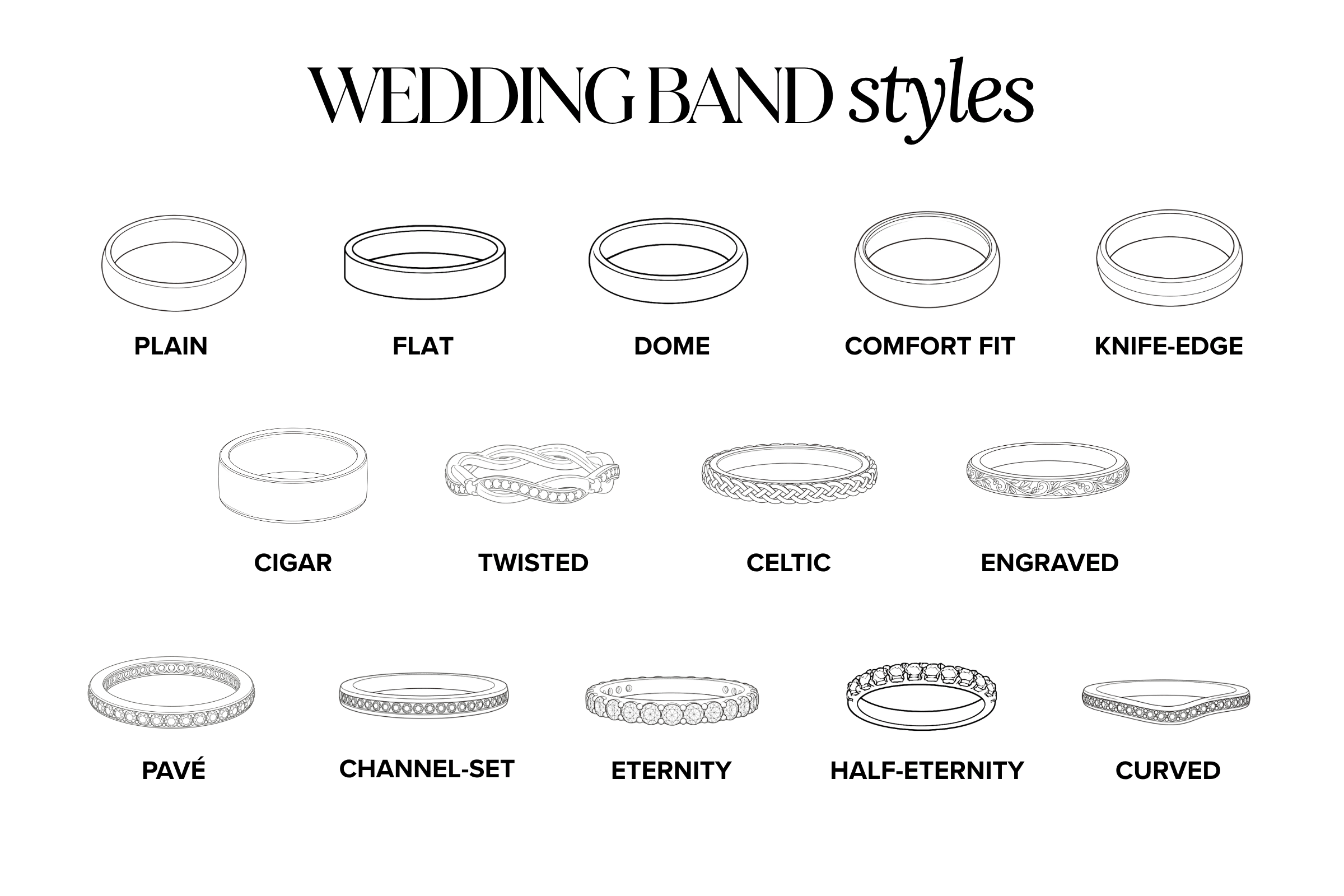
Different types of wedding bands
One of the easiest ways to begin is by looking at the types of wedding band shapes. These wedding band types affect silhouette, comfort, how the ring sits next to other jewelry, and whether the final look feels traditional, structured, slim, or bold.
Plain Band
A smooth, simple band with no extra detailing. It is one of the most timeless choices and remains one of the most popular wedding rings because it works with almost any personal style.
Flat Band
A band with flatter outer surfaces and cleaner lines. This style often feels more contemporary and works well for shoppers drawn to sharper, more structured looks.
Domed Band
A domed band has a noticeably rounded outer surface, giving it a softer and slightly fuller appearance. It is often chosen by people who want a classic ring with a bit more shape.
Comfort Fit Band
This style is rounded on the inside to feel smoother against the finger. It is especially popular for rings worn every day and is often a smart choice for wider bands.
Knife-Edge Band
A knife-edge band has a subtle ridge running along the center, creating crisp definition. It can make simple rings feel more tailored and is often seen in modern wedding ring styles.
Cigar Band
A wider band that makes more of a statement through metal rather than stones. It can feel minimalist, fashion-forward, or vintage-inspired depending on the finish and details.
Twisted / Rope / Infinity Band
This style uses a twisted or woven look to create movement and texture. It often feels romantic and adds interest even when the ring has no stones.
Celtic / Braided Band
An interwoven or knot-inspired design that can feel meaningful, decorative, and distinctive. It is a strong option for anyone who wants symbolism built into the ring itself.
Engraved Band
Decorative patterns are etched into the metal to add personality without relying on stones. Depending on the motif, this can lean traditional, artisanal, or ornate.
Pavé Band
Small stones are set closely together along the band for continuous sparkle. It is ideal for anyone who wants more shine without moving into a larger statement ring.
Channel-Set Band
Stones sit between two metal walls, creating a sleek line of sparkle with a more protected feel. This is a practical option if you want shine and structure at the same time.
Eternity Band
Stones or detailing continue all the way around the ring. It creates a full, luxurious look and is often chosen by people who want maximum visual impact.
Half-Eternity Band
This style places stones or detail across the visible top half rather than the entire ring. It gives a similar effect to an eternity design while often being a bit more practical for everyday wear.
Curved / Contoured Band
A curved band is shaped to sit neatly around another ring. It is especially useful when pairing with an engagement ring that has a low setting or distinctive shape.
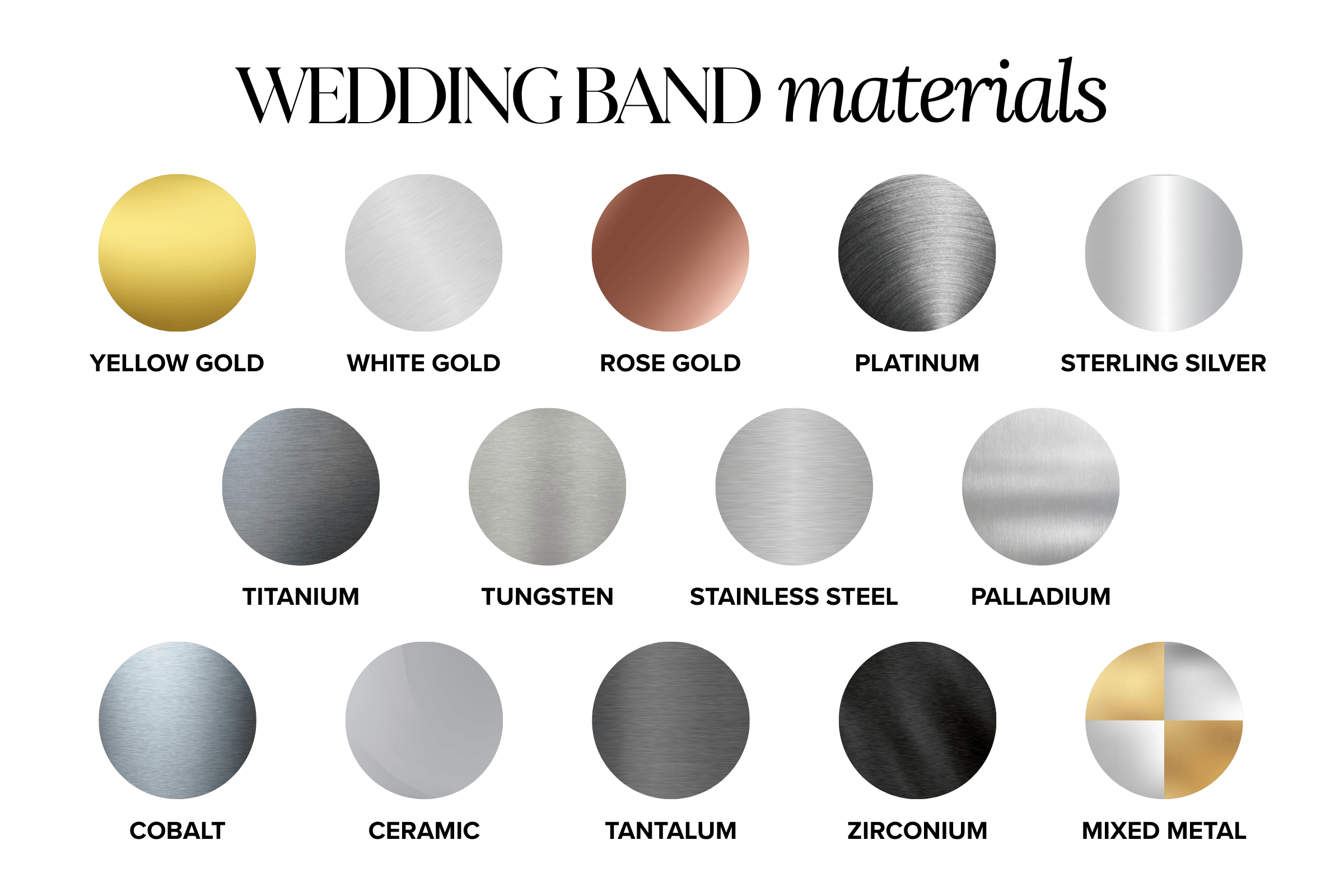
Types of wedding band styles by material
Another useful way to compare rings is by metal. These types of wedding bands for her affect color, weight, price, maintenance, and overall feel, so the material choice matters just as much as the design.
Yellow Gold
A warm, classic choice that has been used in wedding jewelry for generations. It suits traditional, vintage-inspired, and timeless styles especially well.
White Gold
A bright silvery-toned gold that gives a clean, polished look. It is popular with shoppers who want something crisp and versatile without moving to platinum.
Rose Gold
Rose gold has a soft pink tone that feels romantic and distinctive. It works beautifully in both vintage-inspired and more contemporary designs.
Platinum
A naturally white metal known for durability, weight, and a premium feel. It is often chosen for lifelong daily wear because it is strong and does not rely on plating for its color.
Sterling Silver
A more affordable white-toned metal with a bright appearance. It can be a good option for certain budgets, though it generally needs more care over time than harder precious metals.
Titanium
Titanium is lightweight, strong, and modern-looking. It is often chosen by people who want durability without the heavier feel of some other metals.
Tungsten
Tungsten is known for its weight, hardness, and resistance to scratching. It appeals to people who like a very solid feel and a clean, contemporary look.
Stainless Steel
A durable and budget-friendly option with a practical, modern vibe. It can work well for simple bands and minimalist styles.
Palladium
Palladium is a naturally white metal that shares some qualities with platinum while being lighter in weight. It offers a sleek finish and a premium feel. This is likely the least common of all the different types of wedding rings material‑wise.
Cobalt
Cobalt has a bright white appearance and strong durability. It is often chosen by shoppers who want a crisp metal tone and a sturdy ring for everyday wear.
Ceramic
Ceramic rings often have a smooth, polished, modern appearance and can come in a range of colors. They are especially appealing to people drawn to sleek alternative materials.
Tantalum
Tantalum has a darker gray tone and a substantial, slightly industrial feel. It suits understated rings that still feel unusual and premium.
Zirconium
Zirconium is often used for rings with a darker finish and a clean, contemporary look. It is a striking option for people who want something outside the usual gold‑or‑platinum lane.
Mixed Metal / Two-Tone / Tri‑Tone
These designs combine multiple metal colors in one ring. They are useful if you want more contrast, more visual interest, or a ring that ties together different pieces of jewelry.
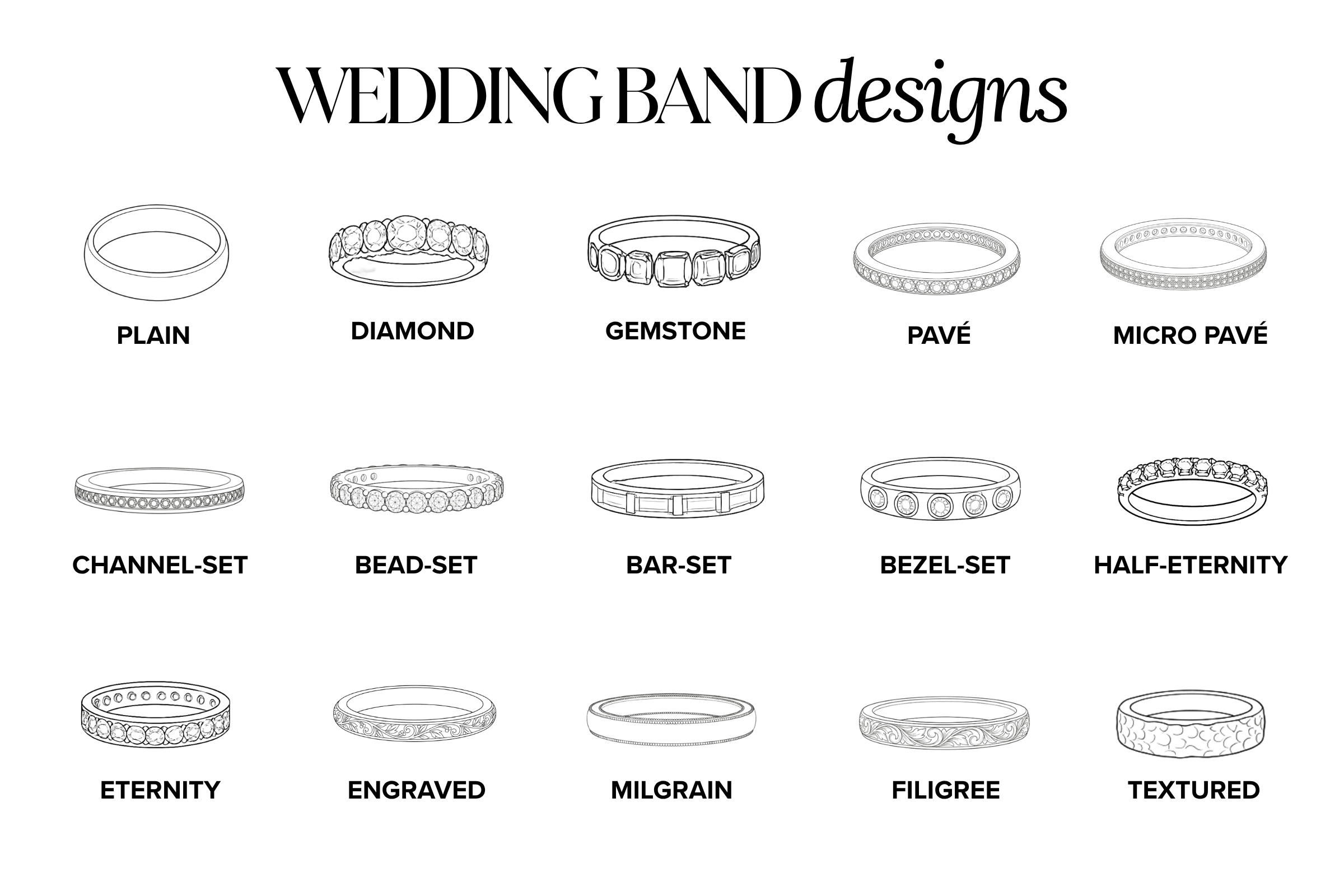
Different styles of wedding rings by stone/detail type
Once you know the overall band shape and metal, the next question is how much sparkle or surface detail you want. Some people prefer a smooth everyday band, while others want stones, texture, or decorative metalwork to define the look.
Plain Metal
A ring with no added stones or decorative surface treatment. This is ideal for people who want simplicity, durability, and a very clean daily‑wear look.
Diamond
A wedding ring that uses diamonds as the main visual detail. This adds brightness and elevates the design without changing the overall function of the ring.
Gemstone
This style uses colored stones rather than relying only on diamonds. It can feel more personal, more expressive, or more distinctive depending on the colors chosen.
Pavé
Small stones are set closely together across the surface for a glittering effect. It suits people who want maximum sparkle from a relatively delicate‑looking design.
Micro Pavé
A finer version of pavé using smaller stones for a more delicate shimmer. It tends to look detailed and refined up close.
Channel-Set
Stones sit within a channel of metal, creating a cleaner and more protected line of sparkle. It gives a structured look that works well for daily wear.
Bead-Set
Small metal beads hold the stones in place, creating texture as well as sparkle. It can resemble pavé while adding slightly more visible metal detail.
Bar-Set
Stones are separated by slim metal bars, giving the ring a linear and architectural look. This creates a cleaner style than some more clustered stone settings.
Bezel-Set
Each stone is framed by a rim of metal, which creates a sleek and protective finish. This is often a good direction for lower-snag, practical rings.
Half-Eternity
Stones or decorative detail cover the top half of the ring rather than going all the way around. It offers visible sparkle while often being easier to wear every day.
Full-Eternity
Stones continue around the entire ring for a more luxurious, all-over effect. It is a strong option for anyone drawn to a fuller, more glamorous finish.
Engraved
Patterns or motifs are cut into the surface of the band. This adds interest without relying on gemstones and can look traditional, sentimental, or decorative.
Milgrain
Tiny bead-like edging adds texture and a vintage feel. It is often used to make simpler rings feel more detailed and more finished.
Filigree
Delicate metalwork creates an intricate, airy appearance. It usually leans vintage-inspired and works well for people who like more ornate design.
Textured / Decorative
This broad category includes hammered, brushed, etched, or otherwise detailed surfaces. It is useful for shoppers who want something more tactile or individual without adding stones.
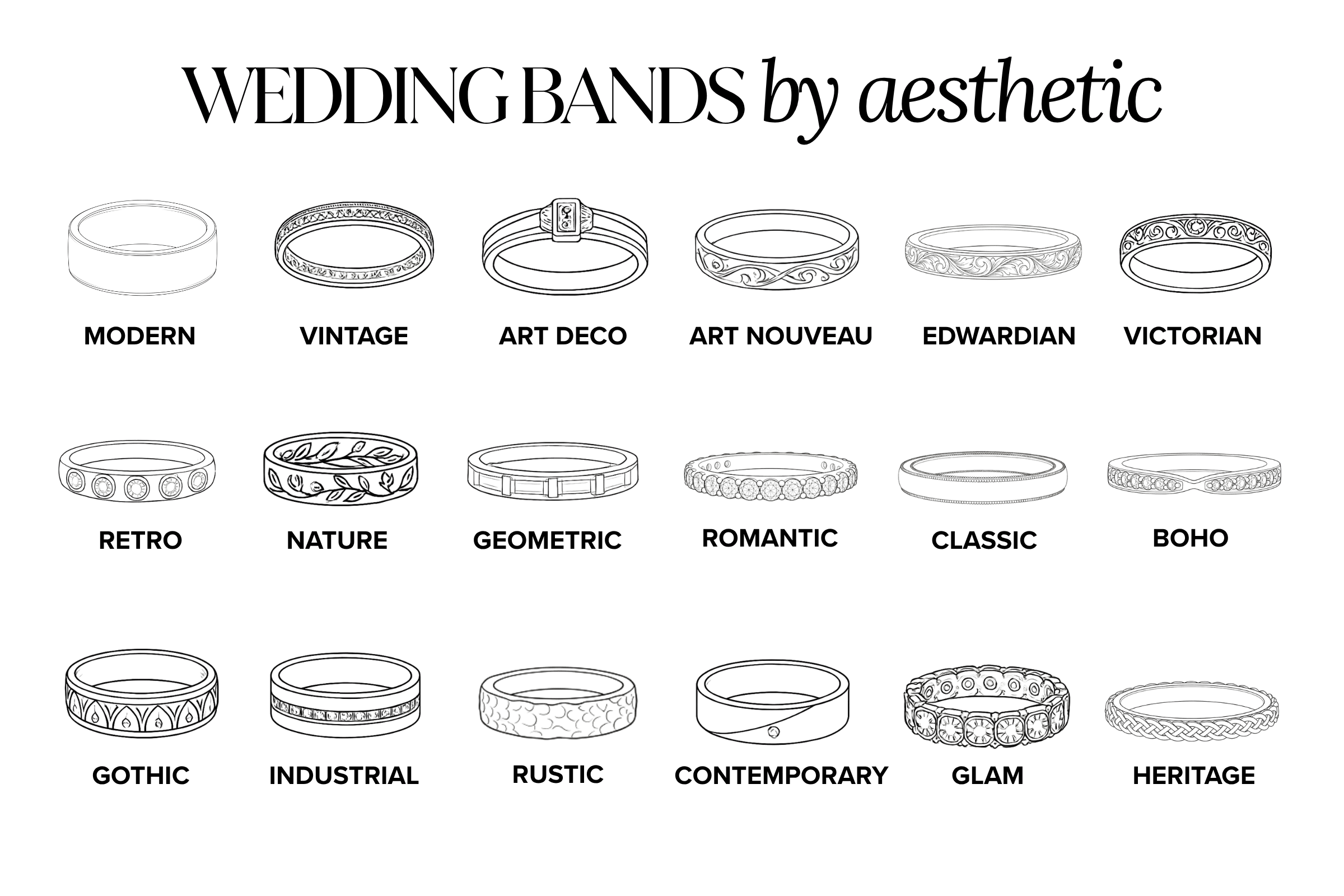
Wedding ring types by design era/aesthetics
The final bucket is the overall vibe. Two rings can share the same metal and general shape but still feel completely different depending on whether the design leans sleek, ornate, rustic, or heritage‑driven.
Minimalist / Modern
Clean lines, limited detailing, and a simple silhouette define this look. It is great for people who want a ring that feels current, uncluttered, and easy to wear.
Vintage-Inspired / Antique-Inspired
These rings borrow cues from older jewelry traditions through engraving, milgrain, softer detailing, or more decorative metalwork. They suit people drawn to age, romance, and character.
Art Deco
Art Deco designs lean into symmetry, geometry, and crisp visual structure. They work especially well for shoppers who like bold lines and a more architectural look.
Art Nouveau
This aesthetic uses flowing lines and organic forms that feel softer and more decorative. It often overlaps with floral, vine, or nature‑led motifs.
Edwardian-Inspired
Delicate detailing, elegant metalwork, and a light, refined feel are common here. It is a good fit for anyone who likes lace‑like sophistication.
Victorian-Inspired
Victorian-inspired rings tend to feel more romantic and ornamented. They often include richer detailing and more decorative flourishes than simpler classic bands.
Retro-Inspired
This category leans bolder and more statement-making, often with stronger shapes or more pronounced metal presence. It suits shoppers who like older looks with a bit more drama.
Nature-Inspired
Designs in this group pull from leaves, vines, branches, florals, or other organic motifs. They often feel romantic, whimsical, or slightly earthy.
Geometric
Sharp lines, repeated shapes, and strong symmetry define this aesthetic. It works well for people who want a clean but eye-catching design language.
Romantic / Ornate
More detail, more softness, and more decorative touches all live here. This is often the lane for shoppers who love layered sparkle or intricate metalwork.
Classic / Timeless
This aesthetic focuses on balance, restraint, and longevity rather than trend-driven features. It is a safe and stylish choice for people who want their ring to age gracefully.
Bohemian
Bohemian styles often feel artistic, relaxed, and less rigidly polished. They can include texture, organic motifs, or less conventional combinations.
Gothic
Darker moods, sharper visual cues, and more dramatic contrast define this look. It appeals to people who want something less traditional and more atmospheric.
Industrial
Industrial styles emphasize strong forms, simpler structure, and a slightly tougher feel. This aesthetic often works well with darker metals, matte finishes, or heavier silhouettes.
Rustic
Rustic rings often feature texture, imperfect-looking surfaces, or a handcrafted feel. They suit people who want something less polished and more grounded.
Contemporary
Contemporary designs feel current without always being ultra-minimal. They often blend clean styling with one interesting twist in shape, finish, or proportion.
Luxury / Glam
This lane is all about shine, richness, and visual presence. It often overlaps with diamond-heavy designs, full-eternity looks, or higher‑impact finishes.
Heritage-Inspired
Heritage-driven rings lean into symbolism, craftsmanship, or traditional influences. This is a natural home for designs with cultural references or story‑led detailing.
How to choose a wedding ring
The easiest way to choose is to think in layers: start with the band shape, then narrow by metal, then decide how much detail or sparkle you want, and finally choose the overall aesthetic that feels most like you. The scannable framework below maps back to those four buckets and also helps with pairing and how the ring is worn every day.
That daily-wear reality is what often separates womens wedding band styles from engagement rings. When comparing an engagement ring vs wedding ring, the wedding band usually needs to work harder for comfort, durability, and long-term practicality. That is also why some people start with engagement ring styles first, then use pairing, stacking, and wedding band sets, to decide what will actually sit well together over time.
It is also worth thinking about who the ring is for and how it will be worn. Some shoppers want slim, decorative bands, while others prefer lower-maintenance or broader profiles. Even a quick look at mens wedding bands shows how much shape, metal, and finish can change the overall feel of a wedding ring before price even enters the picture.
Wedding ring styles chart
Use this choose-your-style matrix to narrow the field without getting lost in every tiny variation. It is designed to connect common priorities to practical recommendations across the four buckets above, while also covering pairing and comfort. If you are comparing types of wedding ring bands, this is a quick place to start.
| Priority | Band Direction | Metal Direction | Stone/Detail Direction | Pairing/Fit Direction | Aesthetic Lane |
|---|---|---|---|---|---|
| Active Lifestyle / Hands-On Work | Plain or Flat | Platinum, Titanium, Tungsten | Plain Metal or Bezel-Set | Comfort Fit, Standalone, Low Profile | Classic / Timeless or Industrial |
| Max Sparkle | Eternity or Curved Pavé-Friendly Band | White Gold or Platinum | Pavé, Micro Pavé, Full-Eternity | Stackable or Flush-Fit Pairing | Luxury / Glam |
| Low Maintenance | Plain, Court, or Domed | Platinum, Tungsten, Cobalt | Plain Metal or Channel-Set | Comfort Fit, Standalone | Minimalist / Modern or Classic / Timeless |
| Wants a Plain Classic Look | Plain, Court, or D-Shape | Yellow Gold, White Gold, Platinum | Plain Metal or Subtle Engraving | Standalone or Simple Flush-Fit | Classic / Timeless |
| Budget-Conscious | Plain, Flat, or Half-Eternity | Sterling Silver, Stainless Steel, Titanium | Plain Metal, Engraved, Half-Eternity | Standalone or Stackable Later | Contemporary or Minimalist / Modern |
| Vintage Vibe | Engraved, Braided, or Domed | Yellow Gold or Rose Gold | Milgrain, Filigree, Engraved | Standalone or Contoured if Pairing is Needed | Vintage-Inspired / Antique-Inspired |
| Wants Unique | Twisted, Cigar, or Contoured | Mixed Metal, Tantalum, Zirconium | Textured / Decorative, Bar-Set, Gemstone | Contoured, Stackable, or Standalone Statement | Geometric, Rustic, or Heritage-Inspired |
| Needs to Pair with an Engagement Ring | Curved / Contoured or Slim Eternity | Match or Complement Existing Metal | Half-Eternity, Pavé, or Plain Metal | Flush-Fit, Contoured, Stackable | Contemporary or Classic / Timeless |
| Prefers a Bold Look | Cigar, Eternity, or Braided | Yellow Gold, Platinum, Tantalum | Full-Eternity, Channel-Set, Textured | Standalone or Statement Stack | Luxury / Glam or Industrial |
| Prefers a Slim/Minimal Look | Plain, Knife-Edge, or Slim Curved | White Gold, Platinum, Palladium | Plain Metal, Micro Pavé, or Light Engraving | Flush-Fit or Delicate Stackable | Minimalist / Modern |
This chart is meant to simplify the process, not lock you into one formula. Plenty of the styles above can overlap, which is part of why there are so many wedding ring options to explore.
Shop Wedding Bands
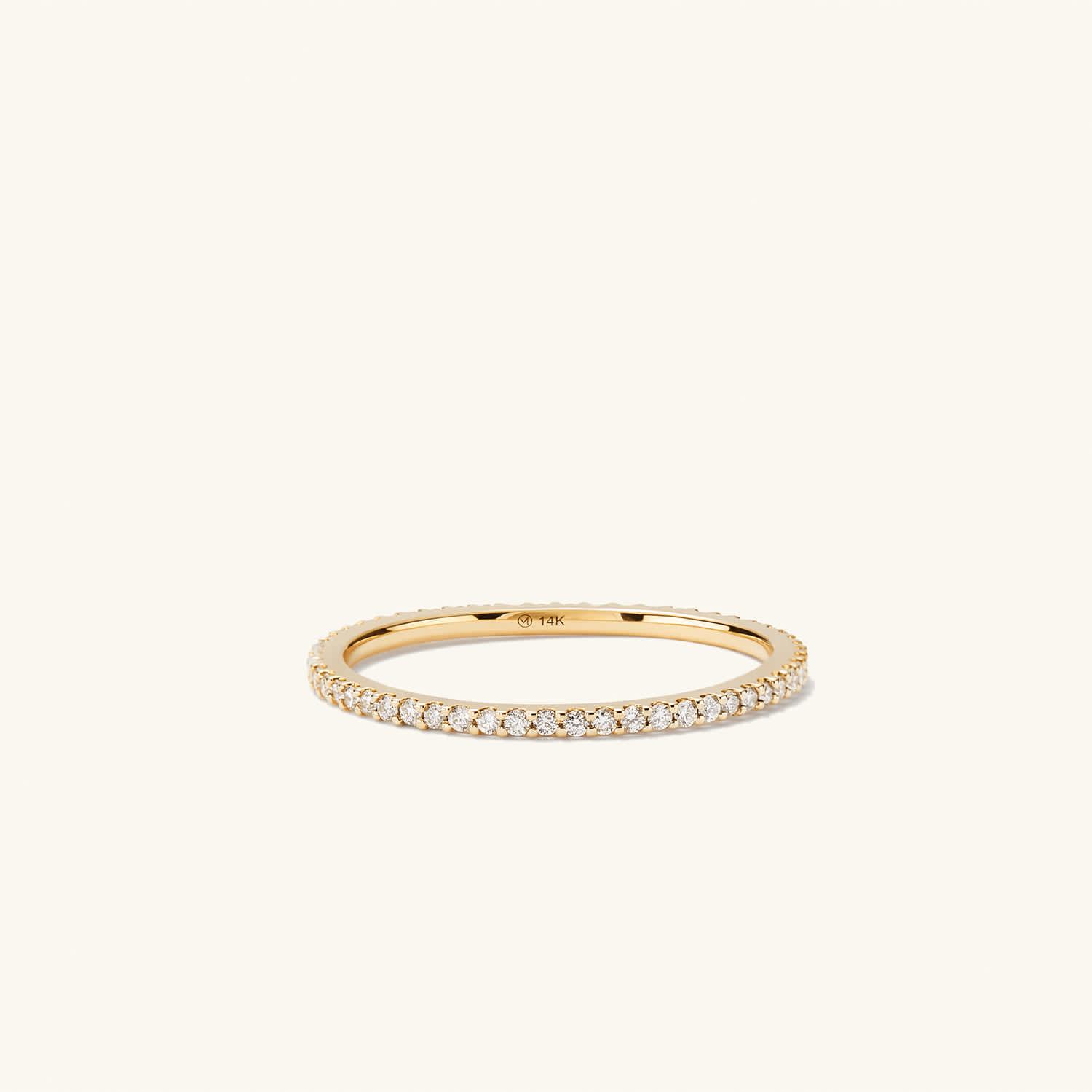
Slim Diamond Eternity Band - 14k Yellow Gold
Mejuri · $598
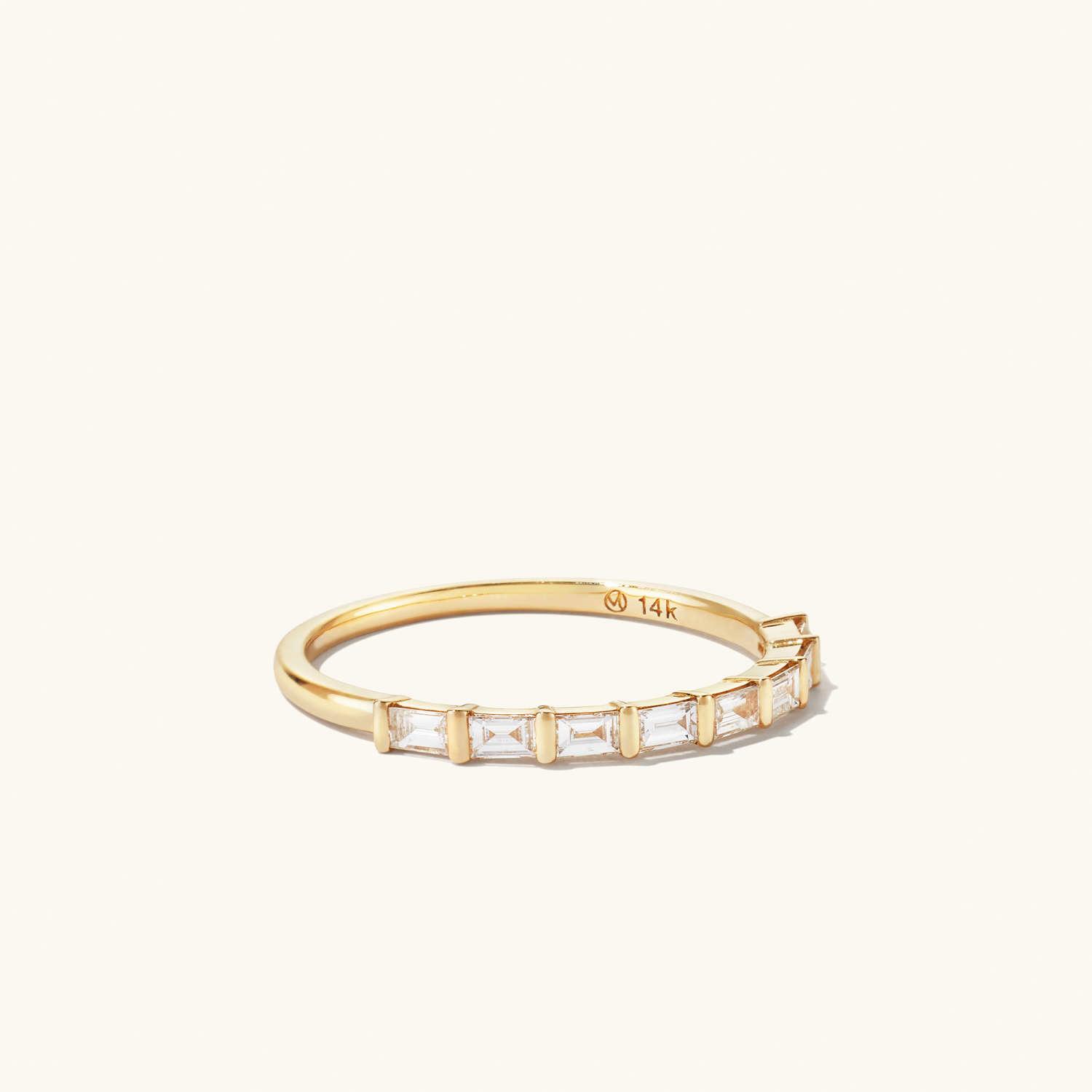
Baguette Diamond Half Eternity Band - 14k Yellow Gold
Mejuri · $748
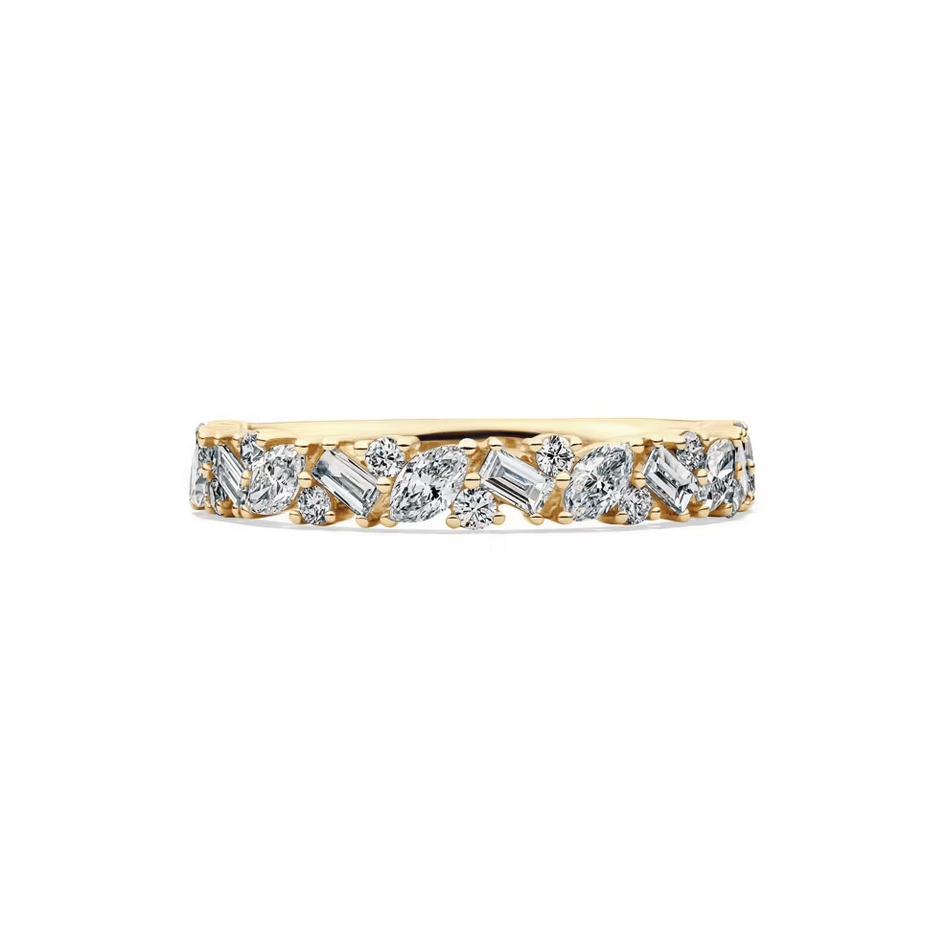
Lab Grown Diamond Anniversary Band in 14K Yellow Gold (3/4 ct. tw.)
Helzberg · $1799
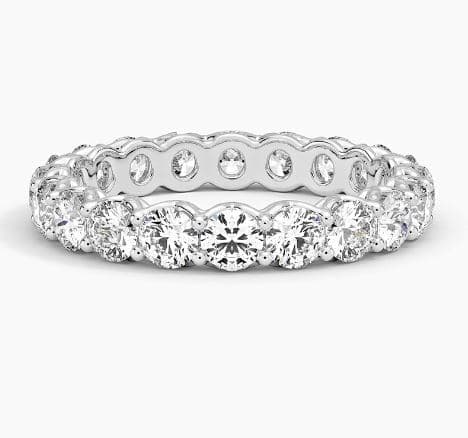
Elodie Lab Diamond Eternity Ring (2 ct. tw.)
Brilliant Earth · $2890
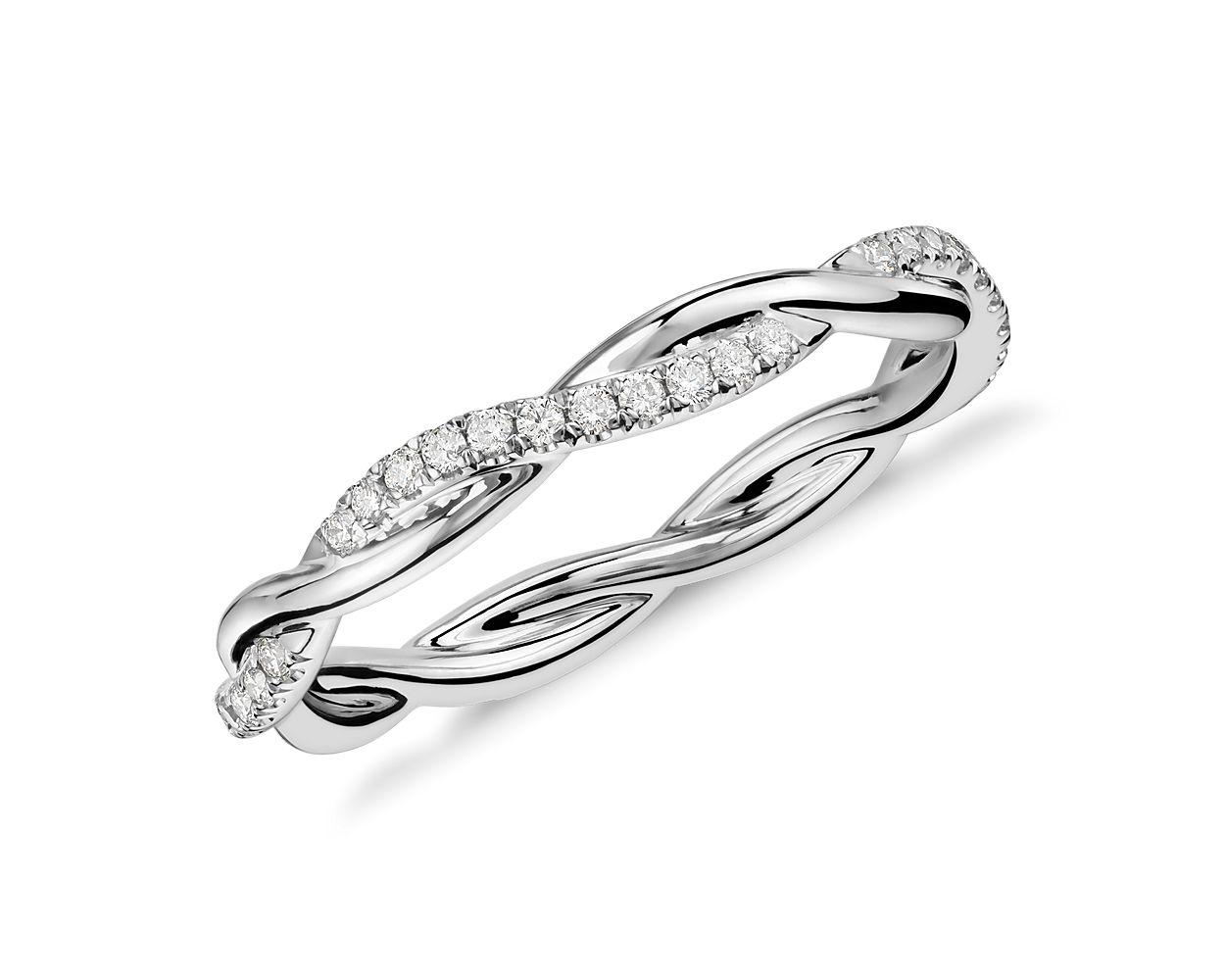
Petite Twist Diamond Eternity Ring In 14k White Gold (1/5 ct. tw.)
Blue Nile · $870
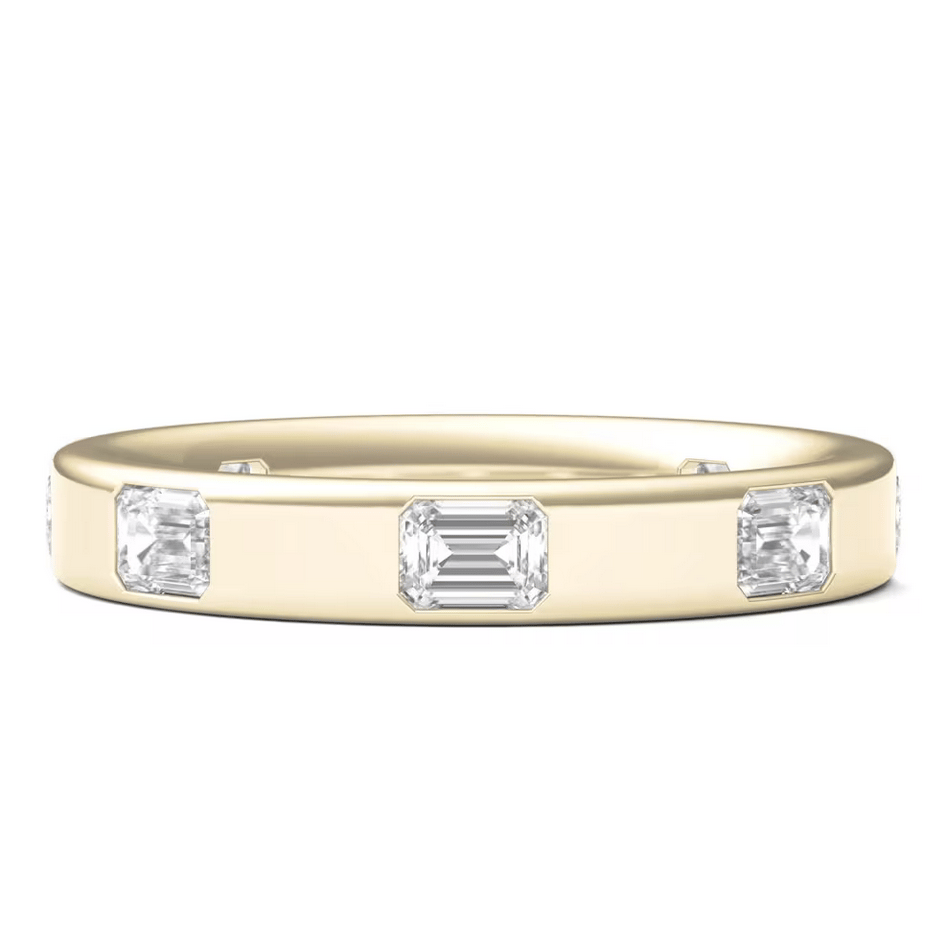
Emerald-Cut Lab Grown Diamond Band in 14K Yellow Gold (1 ct. tw.)
Helzberg · $2499
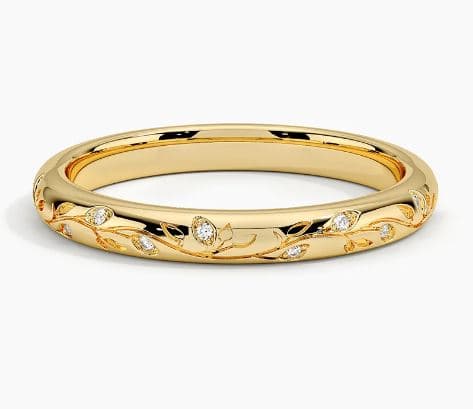
Verdure Engraved Diamond Ring
Brilliant Earth · $1290
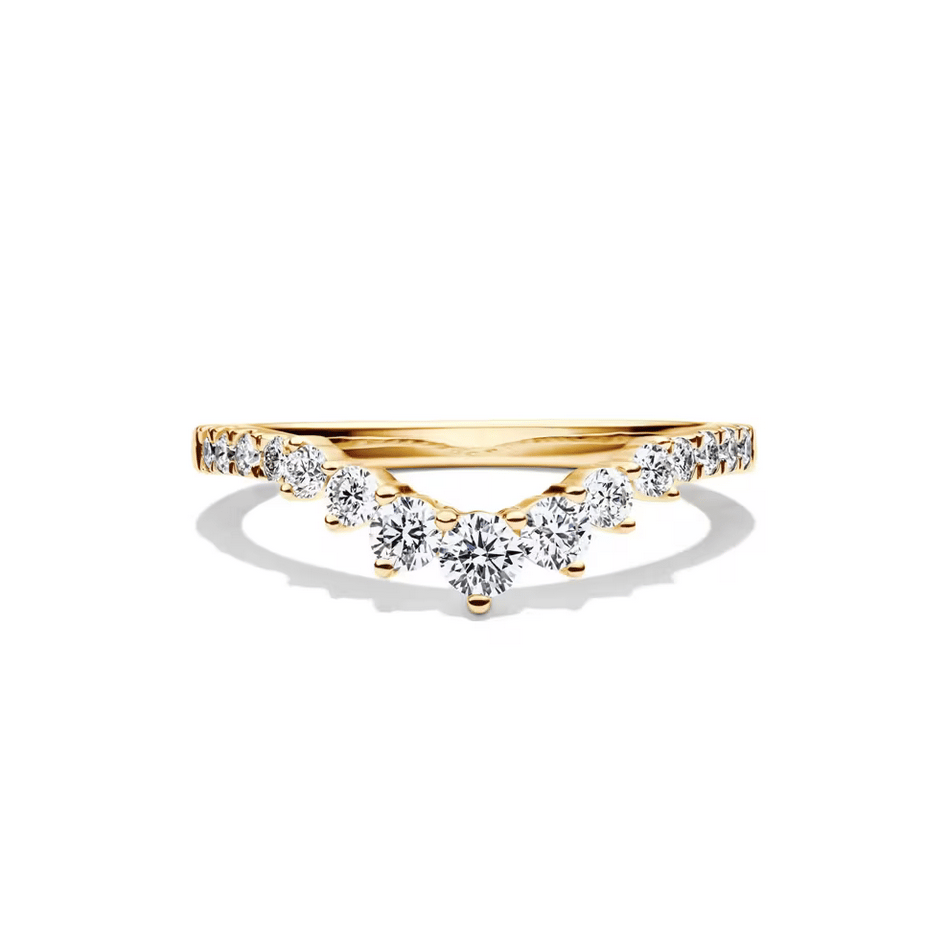
Lab Grown Diamond Contour Band in 14K Yellow Gold (1/2 ct. tw.)
Helzberg · $1299
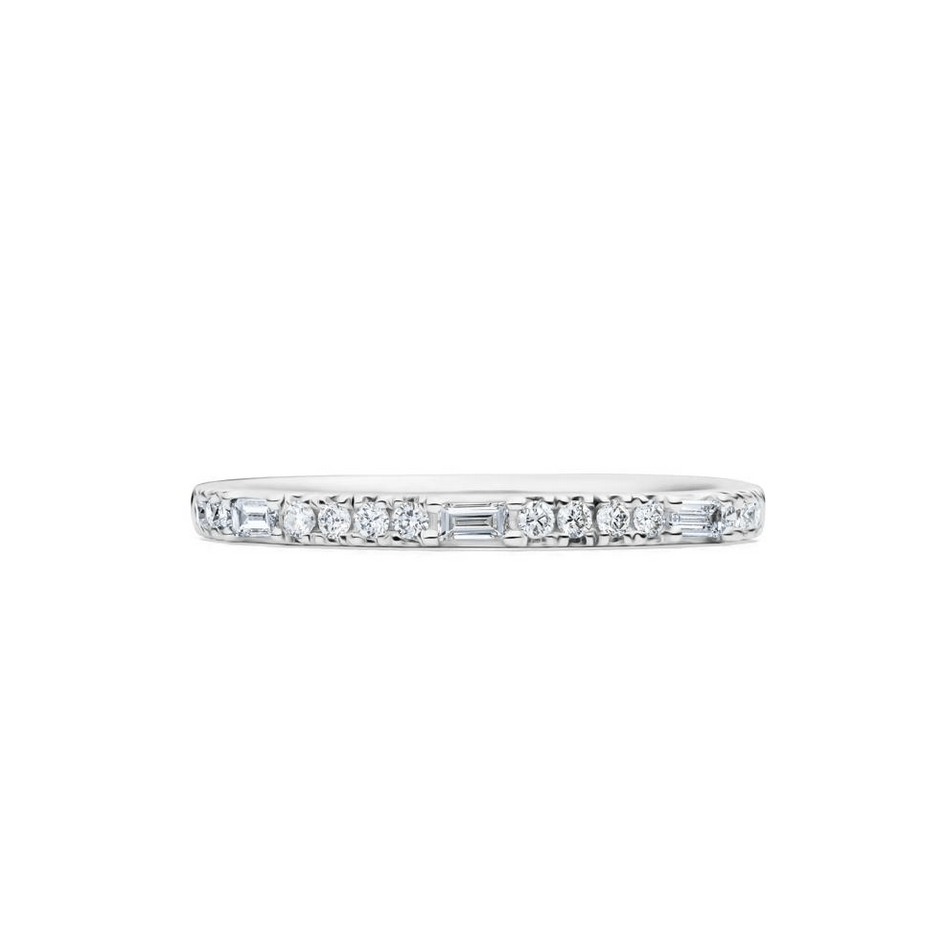
Lab Grown Diamond Round & Baguette Stack Band in 10K White Gold (1/5 ct. t.w)
Helzberg · $599.99

Related Articles