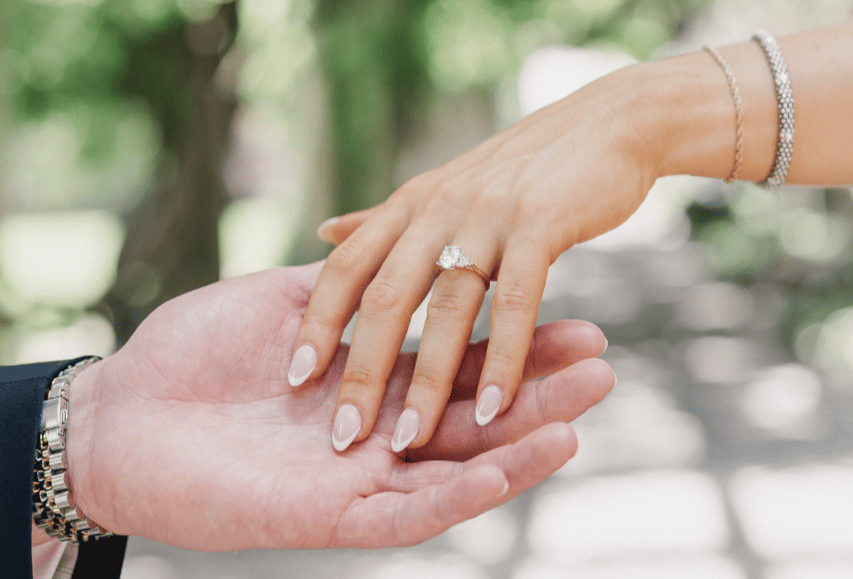
Getting engaged comes with a long to-do list, and engagement ring insurance probably isn't at the top of it. But once the proposal pics are posted and the celebratory brunch is over, insuring your ring should move up fast. It's one of those unglamorous tasks that saves you from a genuinely terrible day down the road.
Why your ring needs its own policy
Your engagement ring (and eventually your wedding band) is likely one of the most valuable and sentimental things you'll ever own. It's a real financial investment, and the sentimental weight is even harder to put a number on. While you're deep in seating charts and venue walkthroughs, the safety of your ring probably isn't on your mind. It should be.
Picture this: your ring slips off while you're gluing together DIY centerpieces, or it goes missing somewhere between the airport and your honeymoon resort. These things happen more often than people think, and it's a lot easier to handle when you already know you're covered.

Wait, doesn't my home insurance cover this?
Sometimes, but usually not enough.
Most people assume their homeowner's or renter's policy has their ring handled. It might offer a little coverage, but it's typically capped at a few thousand dollars, which doesn't stretch far when the average engagement ring runs around $6,000. On top of that, filing a jewelry claim through your home policy can bump up your premiums or complicate your renewal.
That's where dedicated ring insurance comes in. It's built specifically for jewelry, which means it actually accounts for what your ring is worth and what could realistically happen to it. Providers like Jewelers Mutual build their entire policy structure around this gap, since jewelry just doesn't behave like a couch or a laptop when it comes to value.
What you actually get with dedicated jewelry insurance
It's built for jewelry, not just "stuff." General property insurance assumes things depreciate over time. Jewelry doesn't play by those rules. A good policy accounts for the fact that your ring might hold its value or even appreciate.
It covers the real risks. Loss, theft, and damage are all typically covered, usually based on your ring's appraised value rather than some generic estimate.
It can cover more than just the ring. Wedding bands, heirloom pieces, that necklace your partner got you for your anniversary. Most policies let you bundle multiple pieces under one plan instead of juggling separate coverage for everything.
It can even cover upkeep. Some jewelry-specific policies go beyond the big disasters and cover proactive maintenance too, things like prong re-tipping, stone tightening, and clasp replacement, so the small stuff doesn't turn into the big stuff.

How to actually insure your ring
Step 1: Get it appraised. Most insurers require an appraisal to set your replacement value. If your ring is worth $5,000 or more, you'll likely need a diamond certificate or grading report from a recognized gemological lab. Keep this paperwork current, especially if your ring's value changes over time. Jewelers Mutual walks policyholders through exactly what documentation they'll need, so you're not left guessing before you file anything.
Step 2: Pick the right policy. Before you sign anything, ask:
- What's excluded from coverage (loss, theft, damage, all of it)?
- Is there worldwide coverage in case something happens on your honeymoon?
- Does the insured value adjust if your ring appreciates?
- What does the claims process actually look like?
- Does it cover full repair or replacement with an item of the same kind and quality?
- What documentation do you need on hand if you ever file a claim?
Step 3: Stop thinking about it. Once you're insured, you genuinely get to stop worrying. If the worst happens, you file a claim, get your ring repaired or replaced, and move on with your life.
Okay, but is it actually worth the cost?
Yes. Ring insurance typically runs about $1 to $2 per $100 of your ring's value each year. For a $6,000 ring, that's roughly $60 to $120 a year, which is a pretty small price for not having to panic every time you take your ring off to wash dishes.
If you're shopping around, Jewelers Mutual is worth a look. They've been insuring jewelry exclusively for more than 110 years, so this isn't a side business for them, it's the whole business. That kind of specialization shows up in the details: you can choose a deductible as low as $0, your appraisal value gets automatically adjusted every couple of years to keep up with rising jewelry prices, and if something happens to your ring, you work with your own trusted jeweler instead of getting routed to someone in a network you've never met.
The bottom line
Living a little dangerously is fine in most areas of life. Your engagement ring isn't one of them. Getting it insured takes maybe twenty minutes and a quick appraisal, and in exchange, you get to stop mentally cataloging every place you've ever set your ring down. That's a trade worth making.

Related Articles